Strong Finish

“Henceforth there is laid up for me the crown of righteousness, which the Lord, the righteous judge, will award to me on that day, and not only to me but also to all who have loved his appearing” (2 Timothy 4:8).

Jamaican track and field sprint runners have dominated the olympics, over the years in both the one and two hundred meter races. Many Jamaicans remain glued to their televisions during olympics, to see our runners take home gold, silver and bronze in both male and female sprints. We also enjoy the 4×100 meter relays where our runners have generally dominated. Watching and listening to track and field commentators over the years has helped us to develop a greater understanding of the race. Mention is often made about some athletes strong starts compared to the incredibly strong finish of others.

Both of these techniques of starting strong and ending well, seemed to have served these athletes in dominating the sprints. Some critics argue that a strong start is good because when an athlete shoots out of the starring blocks in lighting speed, that it’s hard to catch them down the track. We have seen other athletes start poorly and use their long strides to advance and pass other runners at the finish line. Paul has made many comparisons with running to our Christian journey. “You were running [the race] well; who has interfered and prevented you from obeying the truth” (Galatians 5:7)? In Galatians, Paul was perturbed that some believers who had started well, seemed to have gone astray by false teachings.

The Christian journey isn’t by any means a one hundred meter dash. It is synonymous to a combination of races and obstacle challenges along narrow and windy roads. I’ve watched races such as the hurdles, when athletes banged their legs against the hurdles and crash to the ground. At the end of a race like this, the name of the athlete may appear with did not finish (DNF) on the scoreboard. Other athletes may have a hamstring or other injuries, that are aggravated during running and fail to finish their races. In most races though, only contestants who place first, second or third win a medal or an award. Either way, most athletes aim to complete races, even if they finish behind everyone else.

We have to aim to finish our Christian race and gain our crowns of righteousness. The opposite of this is a crown of eternal damnation. It is sad to see many believers who were once on fire for God, become lukewarm and living in a backslidden state. “For a righteous man falls seven times, and rises again, But the wicked stumble in time of disaster and collapse” (Proverbs 24:16). Solomon once said that the righteous person falls down seven times, but rises again. Even if we fall, Jesus Christ is faithful and just to forgive us of our sins and to cleanse us of all unrighteousness, when we confess our sins (1 John 1:9). You are one confession away from right standing with God, so don’t tarry in a fallen state. Repent, renounce the sin or failure and continue to run your salvation race, in order to reap an eternal reward.

A.P.-Y.

Overcoming Giants

“Then David ran and stood beside him. He took Goliath’s sword out of its holder and killed him by cutting off his head” (1 Samuel 17:51).

In 1 Samuel 17, the Philistine army came to fight against Isreal. “And there came out from the camp of the Philistines a champion named Goliath of Gath, whose height was six cubits and a span” (1 Samuel 17:4). This giant sent fear into the soldiers of Isreal, as he challenged any soldier to come out for a duel. “If he is able to fight with me and kill me, then we will be your servants. But if I prevail against him and kill him, then you shall be our servants and serve us” (1 Samuel 17:9). When David came to bring provisions to his brothers, he heard Goliath’s challenge and he also saw the fear in the soldiers. This situation stirred something in David, so that he challenged the Philistine.

“Then David said to the Philistine, “You come to me with a sword and with a spear and with a javelin, but I come to you in the name of the Lord of hosts, the God of the armies of Israel, whom you have defied” (1 Samuel 17:45). David struck the Philistine and sent him to the ground, with one stone and a slingshot. In addition to that, David used Goliath’s own sword to cut off his head. God will give us the wisdom to use our enemy’s own devices against him. At times we have to cut the head off of some situations, to stop it from coming back to haunt us.

There are challenges that we face that resembles a giant or the spirit of a serpent of deception. We do not need to fear but step on its head and crush that adversary by the power given unto us in the name of Jesus. God has given us authority to tread upon serpents and scorpions and over all the power of the enemy, and nothing shall by any means harm us (Luke 10:19). No weapons can prevail against us and no one can accuse us falsely. Jesus died to blot out the handwriting of ordinances that was written against us, which was contrary to us, and took it out of the way, nailing it to his cross; and having spoiled principalities and powers, he made a show of them openly, triumphing over them in it (Colossians 2:14-15).

God will bring our enemies to open shame and fight against those who fight against us. Who can stand against God and who can stand against us when we come in the power of the name of Jesus.

A.P.-Y.

Spoils of War!

“When Jehoshaphat and his people came to take their spoil, they found among them, in great numbers, goods, clothing, and precious things, which they took for themselves until they could carry no more. They were three days in taking the spoil, it was so much” (2 Chronicles 20:25).

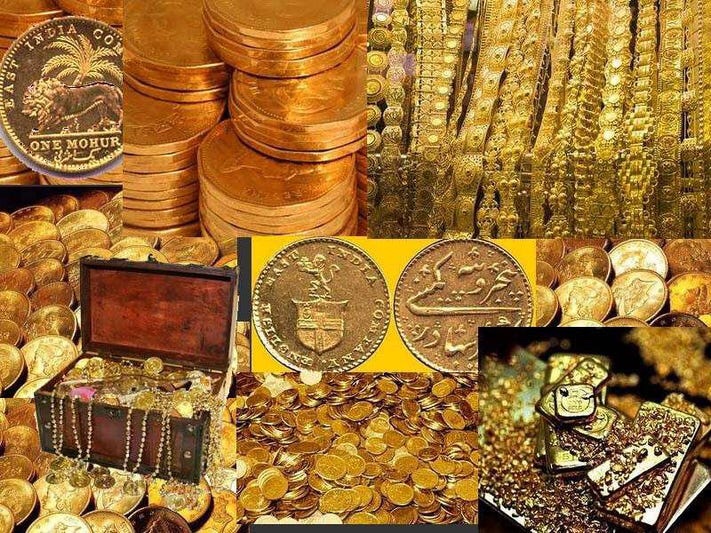
We are familiar with the story of Jehoshaphat and the army who won the battle against their enemies. God fought and won the battle for Jehoshaphat and his people didn’t even need to fight. After the battle, the people took the spoils, which included in large quantities, goods, clothing and precious things. My assumption is that the precious things would have included items such as gold and silver. God defeated the armies to give them victory and also gave them a great reward. In 2 Kings 6, the Syrian army had encamped against Samaria so that they were not able to move freely in order to trade. This caused a great famine in the land and people were so desperate that they resorted to cannibalism.

“But Elisha said, “Hear the word of the Lord: thus says the Lord, Tomorrow about this time a seah of fine flour shall be sold for a shekel, and two seahs of barley for a shekel, at the gate of Samaria”” (2 Kings 7:1). God caused four lepers to approach the camp of the Syrians and multiplied their footsteps. The Syrians ran away in great fear leaving behind their tents which was loaded with food, drink, clothing, gold and silver. “Then the people went out and plundered the camp of the Syrians. So a seah of fine flour was sold for a shekel, and two seahs of barley for a shekel, according to the word of the Lord”(2 Kings 7:16). The possessions of the Syrians was enough to end the famine in Samaria.

There is another story 1 Samuel 30, when the Amalekites raided David’s camp, took all of the people and burnt the camp. David was instructed by the Lord to pursue the army, to overtake them and recover his possessions. “And David inquired of the Lord, “Shall I pursue after this band? Shall I overtake them?” He answered him, “Pursue, for you shall surely overtake and shall surely rescue”” (1 Samuel 30:8). David pursued the army with his men and recovered all that had been taken from his camp. “David also captured all the flocks and herds, and the people drove the livestock before him, and said, “This is David’s spoil”” (1 Samuel 30:20).

God loves justice and hates evil. He also hates it when people decide to gang up on his children and takes pleasure in fighting our battles. Not only does God help us to win, he also wants us to have recompense and restitution. Recompense and restitution for God’s people comes in the form of spoils of war, which is enemy possession taken lawfully. When the enemy comes after us, we pray and allow God to fight our battles. God will give us the strategies to be victorious over the attacks. As we win each battle, there are spoils of war which God will give to us as recompense for damages. “Say to those who have an anxious heart, “Be strong; fear not! Behold, your God will come with vengeance, with the recompense of God. He will come and save you”” (Isaiah 35:4).

A.P.-Y.

Commander of God’s Army

“And he said, “No; but I am the commander of the army of the Lord. Now I have come.” And Joshua fell on his face to the earth and worshiped and said to him, “What does my Lord say to his servant” (Joshua 5:14)?

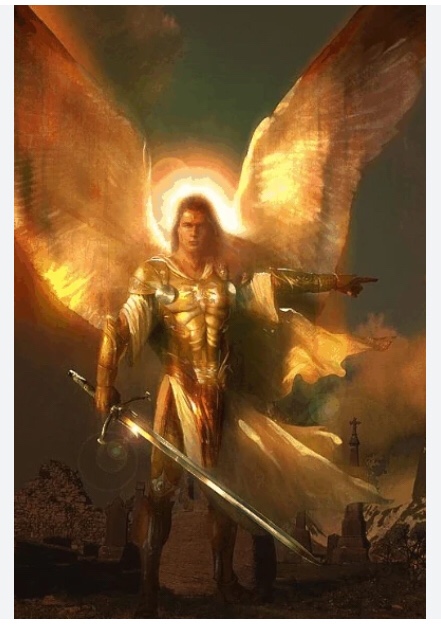
In Joshua 5, Israel prepared to go to battle against Jericho. God instructed Joshua to circumcise the new generation, before they entered into the promised land. “And the Lord said to Joshua, “Today I have rolled away the reproach of Egypt from you.” And so the name of that place is called Gilgal to this day” (Joshua 5:9). When Joshua was by Jericho, he saw a man with a sword drawn and he questioned the man. “Are you for us, or for our adversaries?” The angel told Joshua that he was the commander of the army of the Lord. While Joshua commanded the physical army, the angel commanded the invisible army of angels.

The instructions given to Joshua was to march around Jericho in silence, for seven days. On the seventh day, the Priests blew the ram’s horn, the trumpet and then shouted unto God. Once the people did as God instructed, the walls of Jericho fell flat so that they went in and took the city. The city and all that was in it was devoted to the Lord for destruction. It was not the shout from the people which caused the walls to fall, but the commander of the Lord’s army of angels, manifested the power of God, to give his people victory.

We also saw the army of the Lord surrounding Elisha, when the King of Syria sent a great army with chariots to arrest him. We are not told that the angels went into action, but that Elisha prayed and the soldiers were struck with blindness. He led them into Samaria and then prayed for the Lord to open their eyes. Elisha did not allow the King to strike them down, but fed them and then let them go. This served as a warning as the Syrians never came back to bother Isreal again (2 Kings 6). Later in 2 Kings 18 and 19, the King of Assyria came up against Isreal when Hezekiah was king. He sought the Lord and was reassured by the prophet Isaiah about the Lord’s help.

“And that night the angel of the Lord went out and struck down 185,000 in the camp of the Assyrians. And when people arose early in the morning, behold, these were all dead bodies” (2 Kings 19:35). That must have been a sight for Isreal to see so many dead bodies. Imagine that these 185,000 men were killed by one angel of the Lord. The Lord is a mighty man of war and a mighty God of battle. He comes to the defence of his children and we do not have to fight when we put our trust in God. It’s tempting to try to fight our battles in our own strength and to try to defend ourselves against attacks. We can save our strength, while we worship God in prayer and watch him fight for us.

“Who is this King of glory? The Lord, strong and mighty, the Lord, mighty in battle” (Psalm 24:8)!

A.P.-Y.

Year of Abundance-Joseph Years

“Now Joseph was governor over the land. He was the one who sold to all the people of the land. And Joseph’s brothers came and bowed themselves before him with their faces to the ground” (Genesis 42:6).

When Joseph was only a teenager, he dreamt of doing great things. In Genesis 37, Joseph had dreams of his brothers and his parents bowing down to him. His brothers hated him for his dream and also because he was the favourite of his father. They conspired to kill Joseph but was convinced by Rueben to throw him in a cistern instead. In the end, they decided to sell him to Medianites for twenty shekels of silver and they took him to Egypt. The story told to his Father, was that he had been killed by a wild animal. Joseph found favour in Egypt with his master Potiphar, until his master’s wife started to pursue him. When he maintained his integrity, she lied against him and he was thrown in prison.

Even in prison, Joseph found favour with the guard and he put him in charge. Eventually, two of Pharaoh’s servants were imprisoned and had dreams about their execution and release. Joseph interpreted their dreams and it happened just as the Lord revealed to him. After two years, Pharaoh himself had two dreams concerning seven cows and seven ears of grain. In each vision, there were seven plumb cows and grains that were later swallowed up by seven lean cows and grains. The Magicians could not interpret the dreams and the Cupbearer remembered Joseph and convinced Pharaoh to ask for his help. Pharaoh agreed and Joseph both interpreted the dreams and advised Pharaoh concerning what needed to be done.

“There will come seven years of great plenty throughout all the land of Egypt, but after them there will arise seven years of famine, and all the plenty will be forgotten in the land of Egypt. The famine will consume the land” (Genesis 41:29-30). Joseph advised Pharaoh to appoint Overseers over the land, to collect one fifth of all the produce during the years of plenty. In that way, they would store up enough food during the years of plenty for the seven years of famine. Pharaoh was so impressed by Joseph’s wisdom, that he set him over all the land of Egypt. “During the seven plentiful years the earth produced abundantly” (Genesis 41:47). Joseph stored up grain in great abundance, like the sand of the sea that could not be measured.

During the years or famine, Joseph sold grain to all the Egyptians and people from all over the world also came to buy grain. Joseph’s own family came to buy grain and given his position in Egypt, they all bowed to him as a fulfilment of his dreams. We are entering the Joseph years of abundance and increase. The elect of God will experience promotion, elevation and exponential growth in their spheres of influence. We have to guard against waste and ensure that we are shrewd in our investments. We need great discipline in this season and we have to establish boundaries in order to keep what we generate. Those who refuse to be disciplined will struggle and can revel in excesses. Maintain godly relationships and ensure that your inner circle includes people with wisdom.

“If the axe is dull and he does not sharpen its edge, then he must exert more strength; but wisdom [to sharpen the axe] helps him succeed [with less effort]” (Ecclesiastes 10:10).

A.P.-Y.

God’s Handwriting

“And this is the writing that was written, MENE, MENE, TEKEL, UPHARSIN” (Daniel 5:25).

Belshazzar took over as King when his father Nebuchadnezzar died. This was during the exile of Israel to Babylon and Daniel was also exiled. During his reign, Belshazzar made a feast for a thousand of his Lords. He drank wine with them along with his wives and concubines. He commanded that the vessels of gold and silver, that his father had taken out of the temple of the Lord, be brought to him. He used the vessels to drink with his Lords and wives. “They drank wine and praised the gods of gold and silver, bronze, iron, wood, and stone” (Daniel 5:4). Immediately the finger of a hand appeared and wrote on the wall of the king’s palace, opposite his lamp stand.

The King was so afraid that he turned pale and he sent for his Magicians and Astrologers, to ask them to interpret the hand writing. “Whoever reads this writing, and shows me its interpretation, shall be clothed with purple and have a chain of gold around his neck and shall be the third ruler in the kingdom” (Daniel 5:7). Not surprisingly, the astrologers and magicians could not read the hand writing, nor could they interpret what was written. This made the king even more afraid, until his wife advised him to call Daniel. She advised him that the spirit of God lived in Daniel and explained how he interpreted dreams for Nebuchadnezzar.

“because an excellent spirit, knowledge, and understanding to interpret dreams, explain riddles, and solve problems were found in this Daniel, whom the king named Belteshazzar. Now let Daniel be called, and he will show the interpretation” (Daniel 5:12). Daniel came before the king and showed no delight in his gifts, but agreed to interpret the handwriting. He reminded Belshazzar how God had humbled his father Nebuchadnezzar, when he exalted himself against Him. “And you his son, Belshazzar, have not humbled your heart, though you knew all this” (Daniel 5:22). Daniel pointed out to the king that his actions, in using the vessels that were made to bring honour to God, to revel and worship other gods, had displeased God.

The interpretation from Daniel was as follows: God had numbered the days of Belshazzar’s kingdom and brought it to an end. He had been weighed in the balance and found wanting. His kingdom had been divided and given to another kingdom. That same night, the king was executed and his kingdom was taken over. The weight of the King’s actions had caught up with him. Daniel was indeed promoted to third in the kingdom, but the king lost his life due to dishonouring God. The things of God are for honour and should not be used for dishonourable use. Leadership and power should be guarded carefully, as those in authority have a great responsibility, to treasure the things of God.

God does not take it lightly when people abuse their power and authority and will remove from power, anyone who exalts themselves against him. “Now in a great house there are not only vessels of gold and silver but also of wood and clay, some for honorable use, some for dishonorable. Therefore, if anyone cleanses himself from what is dishonorable, he will be a vessel for honorable use, set apart as holy, useful to the master of the house, ready for every good work” (2 Timothy 2:20-21).

A.P.-Y.

Transforming Relationships (10)

“This is my commandment, that you love one another as I have loved you” (John 15:12).

This is my final instalment in the series regarding relationship transformation. As part of finalising this series, I want to bring us back to the foundation of what Jesus taught us about love and marriage. We are commanded to love in the way that Christ loves. “Greater love has no one than this, that someone lay down his life for his friends” (John 15:13). Paul gave instructions to husbands and wives concerning love and submission. Wives are to submit to their husbands as they submit to the Lord. The husband is the head of the family, in the same way that Christ is the head of the church. Husbands are also commanded to love their wives, in the same way that Christ loves the church and gave his life for the church.

“that he might sanctify her, having cleansed her by the washing of water with the word” (Ephesians 5:26). Sanctification is praying for each other, as Christ makes daily intercession for the church. Similar to the ministry and institution of marriage is the church who is the bride of Christ. His example of love and sacrifice to the church, is what God expects husbands to offer to their wives. Submission is not blind obedience and should not be abused by forms of control and manipulation. It is being willing to humble yourself before God and your other half. It is very easy to submit to someone who you love and respect.

We can assume that no one would marry someone that they don’t love, respect and admire. Since love is a decision, we have to continually affirm and reaffirm our decision and commitment to loving someone. Marriage is the first and most important ministry, of a Christian person who chooses to enter this institution. “For if a man cannot manage his own household, how can he take care of God’s church” (1 Timothy 3:5)? In the same way that satan hates the church, who is the bride of Christ, he hates marriages and will always try to target them. Consider his strategy against mother Eve and subsequently her husband Adam.

Attacks against marriages and the family structure, are attacks against society and humanity. Marriage is a honourable, sacred and holy institution, ordained by God for the fulfilment of purpose and destiny. “Marriage is to be held in honor among all [that is, regarded as something of great value], and the marriage bed undefiled [by immorality or by any sexual sin]; for God will judge the sexually immoral and adulterous” (Hebrews 13:4). For single people who desire marriage, you have to determine and be able to establish how your union with another person, will help you to accomplish God’s purpose for your life. “Do not be unequally yoked with unbelievers. For what partnership has righteousness with lawlessness? Or what fellowship has light with darkness” (2 Corinthians 6:14)?

A.P.-Y.

Transforming Relationships (9)

“Do not give dogs what is holy, and do not throw your pearls before pigs, lest they trample them underfoot and turn to attack you” (Matthew 7:6).

Jesus taught his disciples about judging others and spoke about preserving what is holy and sacred. In a society where values are not always cherished, people are misinterpreting the bible to suit their own desires. There are good reasons why God designed marriage as an institution for love and intimacy. It does not make sense to share your pearls with people who aren’t committed to you. We have to set boundaries and teach people how we want to be treated. We can’t be angry when we fail to set boundaries and then be surprised when someone mistreats us. It is important to know what you want from a relationship for example, in order to clearly communicate your expectations.

Different things are important for each person, so it is important to know what are your non-negotiables. This comes from having standards on things like, how you would like to be spoken to and knowing language and communication styles that you will or will not tolerate. What are your values and ideas around spending quality time and how much is too much or too little? Having an understanding of your love language and being able to communicate this clearly is also helpful. Gary Chapman designed the five love languages and described these as the typical ways in which people have their needs met in a relationship. For example, one love language is words of affirmation.

According to Chapman, someone whose love language is words of affirmation, needs to be affirmed in order to keep their love tank full. This person is also likely to be more sensitive to negative, harsh or critical words. People should seek to have the difficult conversations during the courtship stage, to get a better understanding of the values and beliefs of the other person. Conversations regarding money, savings and things like debt are extremely crucial. This is because disagreement around money is a major challenge in marriage. Other general ideas such as values around family and extended relatives and thoughts on raising children should be discussed.

My father always says that marriage has to be entered into with very careful prayer and consideration. After all, it is the most important decision that a person will make and it will have a major impact on the rest of your life. You have to be willing to ask yourself and the other person the hard questions and be sure that you can live with the answers. We cannot marry someone with traits that we find hard to tolerate and hope that they will change. Love is a decision and contrary to popular beliefs, we don’t fall in love, like someone who trips over and falls into a ditch. As much as we use our heart and emotions, we have to use our minds and intellect. We make a decision to love someone and our choice has to be made with sound judgement.

“Trust in the Lord with all your heart, and do not lean on your own understanding. In all your ways acknowledge him, and he will make straight your paths” (Proverbs 3:5-6).

A.P.-Y.

Transforming Relationships (8) – Safe People

“Keep your heart with all vigilance, for from it flow the springs of life” (Proverbs 4:23).

Solomon spoke in Proverbs and other books about the importance of wisdom. He was the first king to pray and ask God for wisdom to rule his people, after he took over from his father David. Not only did God bless Solomon with wisdom, he added wealth and influence. This was because Solomon sought after what was right, as you need wisdom to manage wealth for example. We also need wisdom to establish and maintain healthy relationships. We saw over the course of this series, that many people can grow up in families, where they are not taught how to establish healthy relationships. How would a person know how to maintain a healthy marriage for example, if they did not see this demonstrated by their parents?

The good news is that it is possible to learn, as we can identity people around us with healthy relationships, that we can learn from. This learning has to be intentional as the people in our sphere of influence will affect us. If you are surrounded by people in dysfunctional relationships, then you are likely to see them as normal and can replicate this. We also need discernment to choose the right people, as it is possible to attract or gravitate towards unsafe people. It takes wisdom to discern the people who are safe and who you are likely to be able to build a healthy and lasting relationship with. Can you identify if someone is ready for marriage?

The reality is that we look at the physical appearance of someone, while only God sees their hearts (1 Samuel 16:7). “If any of you lacks wisdom, let him ask God, who gives generously to all without reproach, and it will be given him” (James 1:5). It is important to ask God for wisdom and stop relying on our own understanding. This is especially important if you keep repeating unhealthy patterns. At some point you have to be able to reflect on the fact that you may be missing something. Relying on the Holy Spirit will give us the discernment to test the spirit of a person (1 John 4:1). People are able to present well and can convince us about their authenticity, but only God knows what is in their hearts.

We have to ask the Holy Spirit for direction about our relationship choices. We are taking a major risk, when we commit our heart and emotions to a relationship without asking the Holy Spirit for guidance. It is also important to have people around you who you can be accountable to. Other people can spot things that you may miss. Who are you accountable to and who watches over you to ensure that you aren’t walking into a ditch? One of the main reasons why God assigned Pastors is to guide the flock. A good Pastor can also spot when someone is walking into a dangerous relationship. They are likely to pray and ask God for wisdom on your behalf. Good and godly parents can also play this role, when their hearts are surrendered to God.

Not everyone is safe, which means that many people are unsafe. The devil can keep us trapped in demonic patterns and cycles to cause us to miss out on the good that God has for us. People learn about roles that they have to play in a job for example and study for years to acquire this. We should also commit to studying about maintaining healthy relationships. No one buys a car without first learning how to drive, for example. Learn about relationship principles and understand what the bible says about how to maintain them. “Wisdom is the principal thing; therefore get wisdom: And with all thy getting get understanding” (Proverbs 4:7).

A.P.-Y.