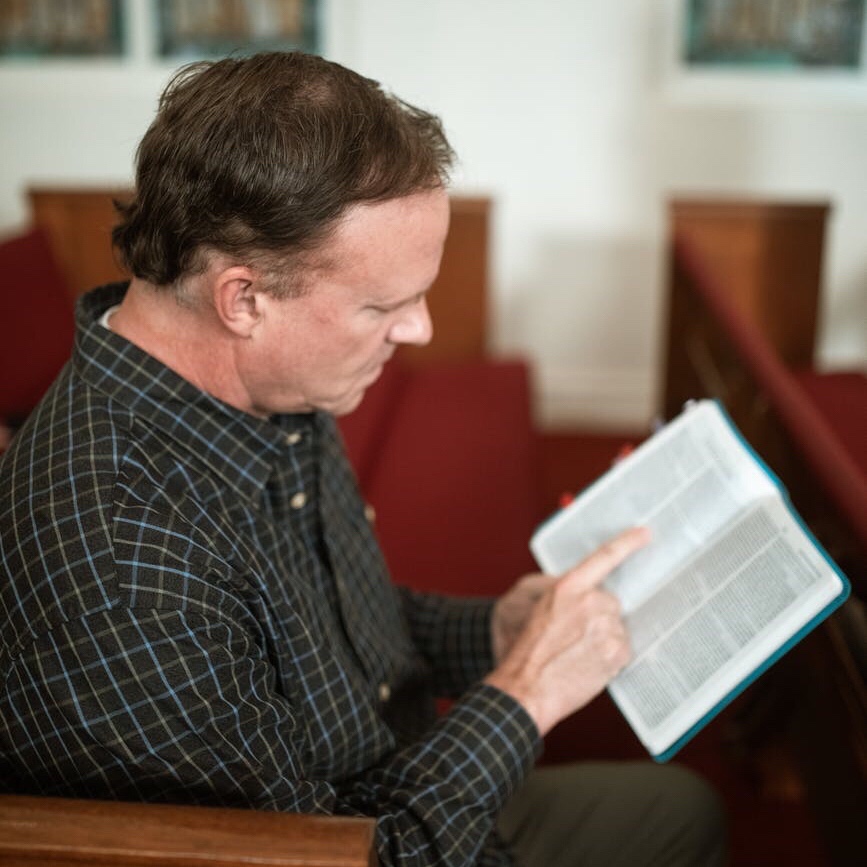
Start With Your Thoughts

“Finally, brothers, whatever is true, whatever is honorable, whatever is just, whatever is pure, whatever is lovely, whatever is commendable, if there is any excellence, if there is anything worthy of praise, think about these things”(Philippians 4:8).

Paul taught the early church about the importance of their mindset. He spoke often about having a kingdom mindset in order to live the abundant life. “Do not be conformed to this world, but be transformed by the renewal of your mind, that by testing you may discern what is the will of God, what is good and acceptable and perfect” (Romans 12:2). Paul was talking about a transformation of our way of thinking, which is synonymous with the born again experience. We were born in sin, shaped in iniquity and so we had the sin nature in us. The sin nature also comes with a way of thinking which is influenced by the world system.

When we become born again, the transformation of becoming a new creature in Christ starts in the mind. We accept Jesus Christ, we are saved and the Holy Spirit comes to live inside of us. We then develop the mind of Christ, so that the Holy Spirit can think through our thoughts and speak through our lips. We know that life and death are in the power of the tongue and our words first take shape in our minds. This is why some people believe that there are no slips of the tongue. “The good person out of the good treasure of his heart produces good, and the evil person out of his evil treasure produces evil, for out of the abundance of the heart his mouth speaks” (Luke 6:45).

Since we know how powerful our words are, we guard our minds and our hearts and watch our thoughts before they become words. The devil cannot curse us but he can use our words to keep us ensnared. What I would advise is that, you refuse to say what you do not wish to see manifest. We can go a bit further and guard our thoughts so that they don’t become words. We guard our thoughts by filtering out information that will not generate good thoughts. Binge watching the news, listening to gossip, watching violent or illicit films will fill our minds with thoughts that do not come from the presence of God.

Let us renew our minds by reading the bible, listening to sermons and having our conversations full of grace and seasoned with salt (Colossians 4:6). This is the saltiness which is the redeeming quality of the church to preserve the earth. We have to pray over our minds and declare that we think only those things that emanate from the throne of God. “We destroy arguments and every lofty opinion raised against the knowledge of God, and take every thought captive to obey Christ” (2 Corinthians 10:5). As the language in this verse suggests, there is a battle that surrounds our thought life. We have to literally wage war against thoughts that do not line up with the word of God. We daily renew our minds so that our thinking will line up with God’s will for us.

A.P.-Y.

Overcoming Learnt Helplessness

“I can do all things through him who strengthens me” (Philippians 4:13).

Most people have natural gifts, abilities and talents. We also have areas of weakness that we are not as confident in and sometimes struggle to master. I remember starting a job as an Administrative Assistant. I did not feel very competent at the job because I was not very proficient with the computer. I did not have a lot of training from my Manager who seemed unhappy in her role. She left the job soon after I started and I worked without a Manager for a few months. I panicked during my first couple of months and wondered how I would manage the day to day tasks. I remembered a story which I had learnt at church about how Joseph had an excellent spirit.

I prayed for God to give me the spirit of excellence to be equipped to do the job well. I also prayed and asked the Holy Spirit to help me and to show what to do. I was amazed that I started learning how to use the computer in order to send and respond to emails and other correspondence. I stayed in that same company for over eight years and managed to progress to the role of a supervisor. Looking back at the situation, I have to credit my success to the help of the Holy Spirit. This is because I did not have the natural skills and abilities to perform the job. I was empowered by the Holy Spirit to do what I could not naturally do.

The Holy Spirit is our comforter, teacher, guide and helper. There is nothing that is impossible when we rely on the leading of the Holy Spirit. I believe that if we are being led by the spirit, then there is no situation where God has placed us where he has not equipped us with what we need. What stops us from maximising our potential and doing things to best of our ability? Fear and a sense of inadequacy! We struggle when we listen to our fears and doubts and they become louder than the voice of God.

Most of us need some time to figure out new things and some tasks cause more struggle for us than others. Before you panic and start doubting your abilities, remember what the word of God says. We can do ALL things. Not some things or a few things, but ALL things through Christ Jesus. I am not saying that we should strain to take on activities or try to fit into roles that we are not created for us. However, if you find yourself in a job or position where you have been led by God, then trust the Holy Spirit to give you the wisdom that you need to succeed.

“And in every matter of wisdom and understanding about which the king inquired of them, he found them ten times better than all the magicians and enchanters that were in all his kingdom.” (Daniel 1:20).

A.P.-Y.

Rising Up

“And David said to the men who stood by him, “What shall be done for the man who kills this Philistine and takes away the reproach from Israel? For who is this uncircumcised Philistine, that he should defy the armies of the living God”” (1 Samuel 17:26)?

David’s three older brothers were among the soldiers that fought in the army against the Philistines. We are familiar with the story of Goliath who was over nine feet tall. His size and stature was intimidating and his challenge to Israel was to send a soldier who could fight him. For forty days, the armies lined up, but none of the soldiers among Israel were brave enough to fight him. Every day David took supplies to his brothers who were stationed in the army. Every day David had to listen to Goliath posture about how mighty he was. Every day David watched the soldiers, including his brothers, shrink back from this Philistine.

“All the men of Israel, when they saw the man, fled from him and were much afraid”(1 Samuel 17:24). David was curious, about the reward, that the King would give to the man who faced and killed Goliath. He was also indignant that his own people seemed afraid to tackle this enemy of God. ‘Who is this uncircumcised Philistine who defies the armies of the living God?’ David knew his place and his standing in God. Perhaps it was his youthful exuberance and the lack of fear which was associated with his age. Either way, David had the mindset which God could use to take down Goliath.

David’s brother was angry that he asked questions and spoke about Goliath. Perhaps he was being protective as he knew David was the type to position himself wherever there was trouble. Maybe he was ashamed as David’s boldness made him question his own courage and conviction. David paid no attention to his rebukes but carried on with his enquiries. I believe that the idea to tackle Goliath was already established in David’s mind. For forty days he walked back and forth from the battle and waited for someone to be bold enough to move forward. David’s frustration from being able to see and hear, made him want to get involved.

We know how the story ends and Isreal was better off because David had the boldness to stand up to a bully. We have to be fearless in our convictions and don’t allow fear to cause us to shrink back from a challenge. What David had over every other soldier in that army was conviction and boldness. Too many of us are tolerating situations that the Lord has given us the resources to tackle. We may need to pray and ask God for revelation knowledge to discern how to address some issues. Either way, folding our hands, running away, shrinking back or being avoidant will not make things better. Nothing is impossible or beyond our capacity when we fight in the strength of the Lord.

“and that all this assembly may know that the Lord saves not with sword and spear. For the battle is the Lord’s, and he will give you into our hand” (1 Samuel 17:47).

A.P.-Y.

Why God Hates Oppression

“Then the Lord said, “I have surely seen the affliction of my people who are in Egypt and have heard their cry because of their taskmasters. I know their sufferings” (Exodus 3:7).

In Exodus 3, God appeared to Moses through a burning bush. God’s visit to Moses was to send him to Egypt to tell Pharoah to set his people free. God could see the affliction of his people and he heard their cry for help. God’s plan was to bring them out from the land of oppression and to bring them into a land of prosperity. God told Moses that when the people were released, that they would worship him in the mountain. They would also be able to sacrifice unto God in the wilderness. God prepared Moses for the stubbornness of Pharoah. “But I know that the king of Egypt will not let you go unless compelled by a mighty hand” (Exodus 3:19).

God knew that the Egyptians benefitted from having the Israelites as slaves to work for them daily. Pharaoh’s oppression was caused by his insecurities about the Jewish people. “And he said to his people, “Behold, the people of Israel are too many and too mighty for us” (Exodus 1:9). His strategy was to set taskmasters over them to afflict them with heavy burdens. “But the more they were oppressed, the more they multiplied and the more they spread abroad. And the Egyptians were in dread of the people of Israel” (Exodus 1:12). How did the Jews manage to continue to expand despite the oppression of Egypt?

The hand of the Lord was on his people, so despite their affliction, they continued to increase and become great. “and made their lives bitter with hard service, in mortar and brick, and in all kinds of work in the field. In all their work they ruthlessly made them work as slaves” (Exodus 1:14). The next thing that Pharoah tried to do was to ask the midwives to kill all the male children. The midwives feared God too much to listen to Pharaoh and the Jews continued to increase in number. Pharaoh then asked his own people to throw all the newborn male children into the river Nile.

It was those atrocities that came up before God concerning his people. God’s promise for his people was to establish them. As such, no power on earth could eradicate the people of God. There are people in positions of power who are threatened by the presence of the children of God. Have you ever been in a job where God allowed you to continue to excel, despite the oppression from your Manager? Oppression stifles creativity and our worship before God. People who feel oppressed often struggle to express worship and praise. God wants his people to be free from oppression so that we can worship him freely. Look up to God because he has heard your cry and deliverance is on the way.

“So I will stretch out my hand and strike Egypt with all the wonders that I will do in it; after that he will let you go” (Exodus 3:20).

A.P.-Y.

Such A Time as This

“For if you keep silent at this time, relief and deliverance will rise for the Jews from another place, but you and your father’s house will perish. And who knows whether you have not come to the kingdom for such a time as this” (Esther 4:14)?

We recall the bible story of Esther who was the niece of Mordecai, who was a captive carried away from Jerusalem by King Nebuchadnezzar to Babylon. Esther was an orphan as her parents died and Mordecai raised her as his own daughter. King Ahasuerus was in search of a new queen after disposing of his former queen Vashti. As it turned out, Esther was a beautiful virgin who found favour with the King. “the king loved Esther more than all the women, and she won grace and favor in his sight more than all the virgins, so that he set the royal crown on her head and made her queen instead of Vashti” (Esther 2:17).

I don’t believe that the favour that was conferred to Esther was by coincidence. As we continue to examine the story, we can see her appointment as divine favour. There were many beautiful women in the kingdom at the time when the King selected a queen. What would have made him select Esther who was an orphan and a Jew? I believe that her selection was by divine providence. Soon after Esther became queen, Haman made himself an enemy of the Jews and issued a decree to have them killed. This would not have been an ideal scenario for Esther. Just at the time when she should have been enjoying her new life as queen, here comes a major threat against her life.

Mordecai’s challenge to Esther was, who knows if God didn’t allow you to become queen, because he saw ahead of time this threat that would come against the Jews? God does nothing by accident and every major transition in our lives comes with a major assignment. God would have used someone else to deliver the Jews if Esther backed away from this assignment. Esther would have missed out on going down in history as someone who walked in the divine favour of God. Her boldness in stepping out to seek the support of the King, granted her great favour including land and possessions. The King was willing to give her as much as half of his kingdom.

Once Esther agreed to support her people and called a fast, God bestowed even greater favour on her than when she became queen. God will grant us favour and establish us in places of authority and influence. This is not so that we can get what we deserve or just as a reward for all our hard work. In other words, we don’t need to become drunk on our own success. Rather, see our rise to prominence as a means to establish the kingdom of God and to complete our God given assignment.

A.P.-Y.

The Enemies of God

“Contend, O Lord, with those who contend with me; fight against those who fight against me” (Psalm 35:1)!

In 1 Samuel, we learn of the story of David in Ziklag, when he defeated the Amalekites and recaptured his wives. David was in Ziklag because he was hiding from Saul who wanted him dead. In the next chapter in 2 Samuel 1, Saul went to war against the Philistines. The Philistines overtook Saul and killed Jonathan and his other sons. “The battle pressed hard against Saul, and the archers found him, and he was badly wounded by the archers”(1 Samuel 31:3). Saul wanted to die with his pride in tack so he asked his armour bearer to end his life. The armour bearer was afraid to do this so Saul took his own life.

Saul’s armour bearer also took his life when he saw that Saul was dead. When David learnt about the death of Jonathan and Saul, he wept. This is quite surprising because Saul wanted David dead. So why did David mourn for Saul? David regarded Saul as the Lord’s anointed one and his fear of God stopped him from harming Saul. Howbeit that David did not need to lift a finger to avenge himself against Saul? Neither did God kill Saul but he took his own life. Saul was out of fellowship with God and could not seek his help for battle. “And when Saul inquired of the Lord, the Lord did not answer him, either by dreams, or by Urim, or by prophets” (1 Samuel 28:6).

Saul sought the help of a medium to try to summon Samuel from the grave. He was so desperate to hear from God, that he thought that a spirit summoned from the dead could help him. It was Saul’s disobedience which caused God to take the kingdom from him and give it to David. Saul perceived that David was anointed to succeed him. He thought that if he could kill David then he would keep the kingdom in his family. Saul forgot that no one can stop the plan of God and it is impossible to usurp God’s authority. As long as David stayed in the presence of God, Saul could not kill him.

God promised that David would become king and none of Saul’s actions could nullify that. Just like David, no King, no Prime Minister, no Manager or leader can stop what God has determined to come to pass in your life. God sets up kings and takes down kings and if Saul needed to die to allow David to be king, then God would allow that. The devil set up Saul to die. God would have pardoned Saul if he repented and walked in his will. Like Saul, many people are stubborn and hard hearted and have made themselves an enemy of God. God will always avenge his people and take vengeance on his enemies.

“How the mighty have fallen, and the weapons of war perished” (2 Samuel 1:27)!

A.P.-Y.

Surviving Hard Times

“David was greatly distressed, for the men spoke of stoning him because the souls of them all were bitterly grieved, each man for his sons and daughters. But David encouraged and strengthened himself in the Lord his God” (1 Samuel 30:6).

David spent many years running and hiding from Saul who wanted to kill him. Samuel anointed David as king when the Lord rejected Saul. Saul knew that David would succeed him and felt threatened by his skill as a warrior. Saul made many attempts at David’s life and David refused to harm him although he had many opportunities to do so. Due to running from Saul, David and his men were often destitute and in need of food and supplies. In an effort to survive, David and his men joined themselves with the Philistines to go to war with them. His main skill was warfare and he would be an asset to any army.

The Philistines did not trust David because they remembered when he fought against them with Saul. They were worried that he could turn on them, so they sent him and his men away. When he returned to his base, disaster had struck. The Amalekites raided their camp, burned it the ground and took away all their wives and children. The only good thing about this was that they did not kill anyone, but took them all away. His men were angry and bitter and wanted to stone him to death. After all, he was their leader and his decision to follow the Philistines had left their camp vulnerable.

Like anyone in David’s position would be, he was ‘greatly distressed.’ His response was to encourage and strengthen himself in the Lord. He asked for his ephod to be brought to him and he went into prayer. He needed answers and he knew that those could only come from God. “And David inquired of the Lord, “Shall I pursue after this band? Shall I overtake them?” He answered him, “Pursue, for you shall surely overtake and shall surely rescue”” (1 Samuel 30:8). David and his men pursued the army and not only recovered their families and possessions, but they also took the possession of the enemies.

I know that the recovery mission must have been intense and exhausting. Did God allow it to give David an opportunity to take what the enemy possessed? Their recovery was of everything that they lost, plus all that belonged to the Amalekites. Many of us have experienced difficult seasons and have lost things that are dear to us. Remember that it is important to encourage and strengthen yourself in the Lord. Don’t neglect your prayer time because you are too discouraged or frustrated. Go into your secret closet just as you are and present your case before God. Ask God what he wants you to do to recover what was lost or stolen.

Make sure to listen so that you will be guided in the way that you need to go. When God gives an instruction, move quickly to do what he says. Encourage yourself, pray and listen and God will restore what you lost plus much more.

A.P.-Y.

Overcoming Rejection

“He was despised and rejected by men, a man of sorrows and acquainted with grief; and as one from whom men hide their faces he was despised, and we esteemed him not” (Isaiah 53:3).

Jesus was despised and rejected by his own people, so much so that it led to his crucifixion on the cross. He caused so much discontent among the religious leaders, that they did everything that they could to have him crucified. It does not make sense, when you think about the fact that Jesus went around doing so much good. “That evening they brought to him many who were oppressed by demons, and he cast out the spirits with a word and healed all who were sick”(Matthew 8:16). Jesus was so compassionate, that he did not turn away anyone who came to seek help.

Jesus took on himself everything that we could ever experience which is bad and negative. “Christ redeemed us from the curse of the law by becoming a curse for us—for it is written, “Cursed is everyone who is hanged on a tree”” (Galatians 3:13). He suffered so that we can know that he understands when we are suffering. Why then do we experience rejection and abandonment? People sometimes reject others because they reject themselves. For example, a parent may struggle to love and accept their child, because they did not experience love and acceptance.

That being said, not everyone who experienced abuse, rejection or neglect go on to treat others in the same way. Unfortunately, there are some people who do replicate what they experienced. What we end up with, are generations and cycles of abuse, neglect, abandonment and rejection. Some people don’t have the capacity to provide love and affection to others, as they have never experienced this for themselves. Many people have found emotional and psychological healing from self help techniques and formal treatment. Other people have experienced spiritual healing and deliverance.

In my experience, I have seen major successes with people who have truly experienced the love of Jesus Christ. This is transforming and sets people free to love others. A deep relationship and understanding of who Jesus is; who we are in Christ and who God says we are, sets us free from emotional wounds. This type of healing is eternal and everlasting and cannot be explained by science or psychology. Submit your life to Jesus. Surrender completely to God and experience his unconditional love. He loves you with an everlasting love. When you experience the love of God, it sets you free from rejection and allows you to love others freely.

A.P.-Y.

Unmovable

“But none of these things move me, neither count I my life dear unto myself, so that I might finish my course with joy, and the ministry, which I have received of the Lord Jesus, to testify the gospel of the grace of God” (Acts 20:24).

Following Paul’s conversion, he spent time with the Apostles and other disciples to learn the message of Jesus Christ. After a few years, he joined in the mission to preach the gospel to the world and to make disciples of many. Many great signs followed Paul’s ministry and he attracted both admiration and disdain along his journey. “so that from his body were brought unto the sick handkerchiefs or aprons, and the diseases departed from them, and the evil spirits went out of them” (Acts 19:12). While in Ephesus, he also taught in the temple and laid hands on new believers so that they received the gift of the Holy Spirit.

True to form, chaos also broke out in the city as there were people who opposed the message that Paul preached. The people worshipped the goddess Diana which the silversmiths made from silver. They made a lot of money from making these idols so they were concerned that Paul taught that there was only one true God. As people were converted to Christianity, they no longer desired to worship a man made God. The crafts men started an uproar in the city and this led to some of the disciples being arrested.

Paul left Ephesus and continued to a few other cities, preaching the gospel until he decided to return to Jerusalem. Paul had been warned not to return to Jerusalem, because there were plans to have him arrested for preaching about Jesus. “except that the Holy Spirit testifies to me in every city that imprisonment and afflictions await me” (Acts 20:23). Although Paul knew that his journey to Jerusalem would lead to his arrest, he was more concerned about doing the will of God. He was unmoved by his conviction to spread the gospel of Jesus Christ and to fulfil his assignment.

Most of us experience light afflictions compared to what Paul and the other disciples experienced. We become easily discouraged when things don’t go according to plan or God does not answer a prayer on our schedule. Could we continue to trust God even if it meant risking our lives and our sense of comfort? Our salvation experience is a call to risk everything for the Lord Jesus Christ and to win the lost for Christ. Only what we do for God on this earth will last into eternity. What are you moved or disturbed by that you need to look at with a fresh perspective?

“so that the tested genuineness of your faith—more precious than gold that perishes though it is tested by fire—may be found to result in praise and glory and honor at the revelation of Jesus Christ” (1 Peter 1:7).

A.P.-Y.

Believing is Seeing

“Now faith is the assurance of things hoped for, the conviction of things not seen” (Hebrews 11:1).

Today’s heading is my attempt at a play on words based on a popular phrase which says that ‘seeing is believing.’ People mean that they have to see something to believe it, or that they need physical proof to determine that something exists. Based on our world system, people are trained from an early age to require physical proof. Scientists ask for empirical evidence, which is information gained by observation or experimentation. This is why some people who study science struggle to believe in God. Faith has a way of turning man made principles on its head.

Faith requires that you believe without the evidence of sight. Not a physical sight in fact, but having spiritual sight which stems from insight. This spiritual sight is gained through our understanding of the word and faith. “The entrance of thy words giveth light; It giveth understanding unto the simple” (Psalm 119:130). Faith increases through our hearing and understanding of the word. If you can conceive a thing in your heart and mind, then it will come to pass. This relates to having a vision of what we want to see manifest. Even scientists can agree around planning and having a vision.

The interesting thing is that scientists need a vision to create new inventions. Having any type of vision requires faith in the unseen. Habakkuk said, “And the LORD answered me, and said, Write the vision, and make it plain upon tables, that he may run that readeth it” (Habakkuk 2:2). Many people who don’t believe in God will agree around being optimistic and also around the law of attraction. “For as he thinketh in his heart, so is he”(Proverbs 23:7). Many biblical thoughts and ideas shape modern thoughts and theories. Many new age ideas borrow principles from the bible, without giving credit to God or to the prophets.

To summarise, we have to believe in order to see the manifestation of things that require faith. There are many basic things that we don’t need faith to see because these things are visible. It takes faith to believe for finances when your bank balance is low. You need faith for healing when the doctor’s report says that you are sick. You need faith for the promotion when your company says that there is no money in the budget. You need faith to believe for the salvation of a loved one whose heart is hardened. Faith activates the impossible and brings into reality those things that we cannot see.

A.P.-Y.