Spiritual Authority (3)

“and raised us up with him and seated us with him in the heavenly places in Christ Jesus” (Ephesians 2:6).

Yesterday we discussed the fall of satan and looked at how Jesus restored our relationship with God and restored kingdom dominion and power. Two of my fellow bloggers Manu – The Faithfood Blog and Pedro – Kingdom Thoughts, helped me to consider the time of satan’s falling. While I originally meant to write that he fell after Adam and Eve, Pedro pointed out that he fell before that. The discussion encouraged me to do a bit of research and some of my findings suggests that he fell before Adam and Eve, after the creation of the angels. Other accounts suggests that he fell after Adam and Eve did. I think from reading the bible, both ideas make sense, as satan was most likely in a fallen state when he tempted Eve. Did he want to take dominion from mankind, because he himself had fallen or did he want us to be as miserable as he was?

His shape shifting into a serpent was interesting and he was certainly not in alignment with God’s will and purpose. I won’t spend too much time talking about the serpent as the greater focus is on the authority that we have over him. While it is important to be aware of the strategies of the adversary, we have to balance that against giving him too much attention. Paul wrote in Ephesians 2, about salvation through grace. He points to our state after the fall, which was death through sin. “in which you once walked, following the course of this world, following the prince of the power of the air, the spirit that is now at work in the sons of disobedience” (Ephesians 2:2). When we were in sin, we followed sinful passions and desires. God loved us despite our sin and transformed us from death to life in Christ Jesus.

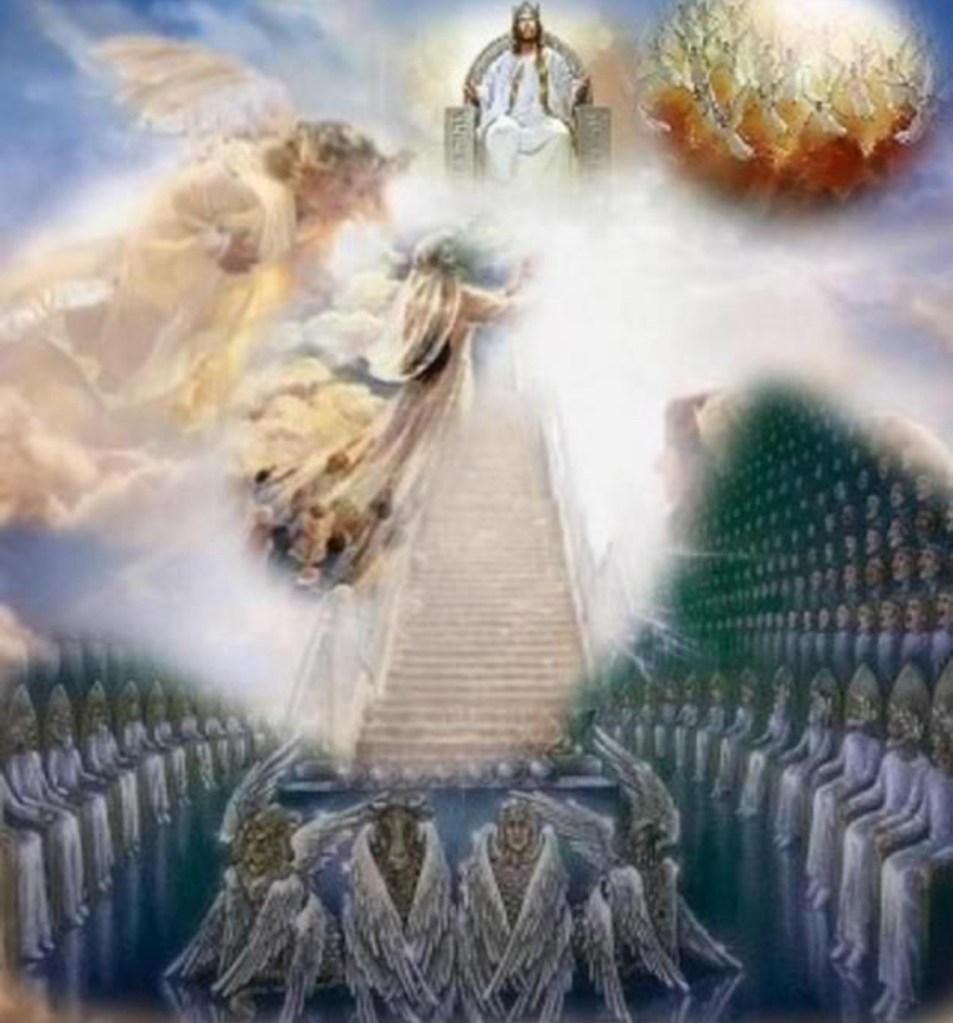
As we are saved by grace, we are now raised to sit with Christ in heavenly places. This sitting in heavenly places represents a seat of honour and authority and it gives us heavenly access and privileges. This is similar to having access to a VIP club or the business lounge on a flight. We have front row seats to the affairs of heaven and have access to come boldly to the throne of grace to find mercy to help in the time of need (Hebrews 4:16). Jesus explained this a bit more in Matthew 18:18, when he said, “Truly, I say to you, whatever you bind on earth shall be bound in heaven, and whatever you loose on earth shall be loosed in heaven.” He was saying that we have the power to forbid happenings on earth, by an indisputable authority and to allow by an indisputable authority.

This indisputable authority is Jesus Christ through the power of the Holy Spirit. Jesus continued in Matthew 18, that if two believers agreed about anything here on earth when they pray, it would be done for them by God in heaven. In essence, although we pray, agree, allow or disallow things here on the earth, this is registered in our seat of authority heaven, before we see the physical manifestation here on earth. When two or more believers gather in the name of Jesus, he is in our midst as a seal. Our salvation is a free gift from God which we don’t have to earn. This salvation grants us access into the affairs of heaven, which also gives us access to power and authority. “For we are his workmanship, created in Christ Jesus for good works, which God prepared beforehand, that we should walk in them” (Ephesians 2:10).

A.P.-Y.

Spiritual Authority (2)

“far above all rule and authority and power and dominion, and above every name that is named, not only in this age but also in the one to come” (Ephesians 1:21).

Yesterday we explored a brief backdrop of the creation story and considered God’s original design for humanity to have dominion. We saw how we lost dominion and then God sent Jesus to redeem our relationship with him, and to restore our authority. Paul said in Ephesians 1, that his prayer for the church, is that our hearts and eyes would be opened. He wanted us to come into the full and complete understanding, of the riches of Christ’s glorious inheritance (gift) to the church. That we would understand the great power that is within us when we believe in him. This great might and power was present in Jesus Christ, raised him from the dead and placed him at the right hand of God, in heavenly places.

Jesus is seated far above all rule, all authority, all power and all dominion and above every name that has been named or will ever be named. “And he put all things under his feet and gave him as head over all things to the church” (Ephesians 1:22). As Christ is the head of the church, we represent his body and are also seated with him. The same Holy Spirit, resurrection power who raised Jesus from the dead lives in us. It was important for Jesus to be resurrected and to show himself to his disciples. His appearance was to impart power to the church and to proclaim the forgiveness of sins to all nations (Luke 24:46-47). “And behold, I am sending the promise of my Father upon you. But stay in the city until you are clothed with power from on high” (Luke 24:49).

Long before Jesus’s resurrection, he demonstrated authority to his disciples and followers. He healed the sick, raised the dead, cleansed the leper, restored sight to the blind, the mute were able to speak and those who were demon possessed were set free. As he demonstrated authority and showed his disciples the way, he later sent them out to use the power in his name. Seventy were sent out and when they returned, marvelled that even the demons were subject to them by the name of Jesus. “And he said to them, “I saw Satan fall like lightning from heaven. Behold, I have given you authority to tread on serpents and scorpions, and over all the power of the enemy, and nothing shall hurt you”” (Luke 10:18-19). Jesus’s mention of satan falling like lightning was in relation to Isaiah 14:12. “How you have fallen from heaven, morning star, son of the dawn! You have been cast down to the earth, you who once laid low the nations!”

Satan’s fall was before the fall of Adam and Eve, when he tricked them into eating from the forbidden tree. He had purposed in his heart that he would ascend into heaven and raise his throne above the stars of God. Somehow he was delusional enough to think that mankind’s fall would gain him dominion and power over God. It is no coincidence that Jesus mentioned satan’s fall, as his disciples were demonstrating power and authority. Their trampling of serpents, scorpions and every power of the enemy represented greater downfall for satan. Jesus then rejoiced in the Holy Spirit and thanked the Lord that things that were once hidden were now being revealed. His rejoicing was that the eyes of our understanding was now open, where satan once kept us in darkness. He rejoiced that his disciples were walking in authority.

“But you will receive power when the Holy Spirit has come upon you, and you will be my witnesses in Jerusalem and in all Judea and Samaria, and to the end of the earth” (Acts 1:8).

A.P.-Y.

Spiritual Authority (1)

Over the next couple of days, I will explore the authority of the believer, as we live and reign in the kingdom of God. Paul taught about spiritual authority in the book of Ephesians and I will explore the five chapters, in as much depth as possible, to explore the mysteries of the kingdom. Jesus taught his disciples about power and authority and demonstrated this authority for us. The disciples walked in authority and boldness, during and after Jesus’s ascension. We will consider God’s original design for mankind to have dominion and to walk in this authority as sons and daughters. We will explore how the fall of Adam truncated this authority, until Jesus rose triumphant and took back the keys of death, hell and the grave.

I believe that understanding authority is one of the bedrocks of our kingdom assignment and without authority, many believers are living in constant defeat. I believe that if we understand and truly live in authority, then we will be victorious. Paul started in Ephesians 1, by blessing God and acknowledging the blessings which he gave us through Christ Jesus in heavenly places. Considering the original design, God created us in his own image and likeness in Genesis 1:26. We were also given dominion over the sea, air, land and the earth and over every living thing. God also gave Adam authority to name every living thing and from man, God created woman. “And God blessed them, and God said unto them, Be fruitful, and multiply, and replenish the earth, and subdue it: and have dominion over the fish of the sea, and over the fowl of the air, and over every living thing that moveth upon the earth” (Genesis 1:28).

With every promise, there is a caveat or a condition to maintain and keep the promise. For mankind, it was to obey God and to resist eating from the tree of knowledge of good and evil. Eating from this tree would bring death, separation from God and the curse. Satan tempted Eve, she ate and gave to her husband who also ate and their eyes were open and they knew that they were naked and were ashamed. God clothed Adam and Eve, sent them out of the garden to till the soil and told them the curses that came with the broken covenant. Since the fall, man has had to deal with death, disease, hard labour and enmity between the seed of man and the adversary. God had a redemption plan for mankind and Jesus Christ was born, lived, was crucified, died and resurrected to redeem the power and authority that we received from God.

Jesus first took the keys of death and hell and he lives forevermore (Revelations 1:18). He also nailed our sins to the cross and cancelled every record of debt that was held against us, and triumphed over the works of darkness (Colossians 2:14). He disarmed the principalities and the powers of darkness on our behalf, to restore the church’s authority on the earth. Paul also said, that we have been predestined and adopted into the family of God through Jesus Christ. We have been redeemed through the blood of Jesus and given an abundance of wisdom and spiritual insight. The Holy Spirit seals our promise of salvation and reveals all mysteries to the children of God. Paul prayed that we will receive wisdom from the Holy Spirit and that our spiritual eyes would be open.

As we continue through this study of Ephesians and consider other scriptures which explains the believer’s authority, I pray that our eyes will also be open and our hearts will remain ready to receive.

A.P.-Y.

Joseph Years – Open Doors & Alignment

In Genesis 41, we saw the fulfilment of Joseph’s interpretation of Pharaoh’s dreams. As he had interpreted, the land yielded in abundance for seven years and Joseph gathered in those years. He stored up grain in large quantities that he was unable to keep account of. During the years of abundance and harvest, he also fathered two sons and named them Manasseh and Ephraim. Manasseh means, ‘God has made me forget all the hardship of my father’s house,’ and Ephraim means, ‘for God has made me fruitful in the land of affliction.’ After the seven years of plenty ended, the seven years of famine started. Just like Joseph said, there was famine all over the land, and in Egypt.

Joseph opened the storehouses during the years of famine and sold to Egypt and people from other countries also came to purchase food. Joseph’s brothers also travelled to Egypt to buy food, which fulfilled the vision which he had about his family serving him. Joseph was now governor of Egypt and was in charge of whether or not they received food. His heart was one of forgiveness, because he realised that God used his past painful experience to prepare provision for his family and for others. After he had tested his brothers, he was able to bring his entire family to settle with him in Egypt. This way they would continue to be provided for and would benefit from Joseph’s wealth and status.

Joseph’s journey to Egypt was a major door of opportunity for himself and his family. The beginning was painful and disheartening for Joseph, yet because he maintained his integrity and walked in the fear of the Lord, he prospered and had great success. Joseph had favour wherever he went and excelled in Potipher’s house and even stood out in prison. His prison experience, prepared him for government and leadership in the palace. We have entered the year of open doors and establishment, when God will strategically align and position us for greatness and success. Last year we experienced some abundance and the year established some foundations for us to build on.

Twenty four represents God’s power, government and authority. It represents God’s priesthood and a solid foundation built on worship. Our churches need to return to a place of true worship and praise unto God. The Holy Spirit will continue to disrupt our programs until we are able to experience the free flow of the anointing and the presence of God. The Holy Spirit will be poured out and God requires a life of holiness and consecration in order for us to experience his abundance. Visions will increase as God will pour his spirit out into those who are willing to hear his voice and to see his presence and power. God is aligning his church for an outpouring and our personal walk with God needs to line up with his perfect will and plan.

Listen to the voice of God, seek to walk in his will and purpose, be guided by the Holy Spirit and experience doors that will open without resistance. For those who have kept the word of God and patiently endured, the angel of God will open doors that no one can shut. “I know your works. Behold, I have set before you an open door, which no one is able to shut. I know that you have but little power, and yet you have kept my word and have not denied my name” (Revelation 3:8). The church of Christ is set apart so that what affects the world, will not affect us in the same way. We are not of this kingdom and we live in the currency of heaven as we stay seated with Christ above all powers of this world. Continue to remain in alignment and make sure that your relationships are in alignment with your kingdom assignment.

”The lines have fallen for me in pleasant places; indeed, I have a beautiful inheritance” (Psalm 16:6).

A.P.-Y.

Don’t Stay in Lo-debar

“Then King David sent and brought him from the house of Machir the son of Ammiel, at Lo-debar” (2 Samuel 9:5).

Before David was made King of Judah, Saul and his sons were killed by the Philistines including Johnathan whom David loved. “Jonathan, the son of Saul, had a son who was crippled in his feet. He was five years old when the news about Saul and Jonathan came from Jezreel, and his nurse took him up and fled, and as she fled in her haste, he fell and became lame. And his name was Mephibosheth” (2 Samuel 4:4). The nurse would have tried to escape with Mephibosheth because it was customary for a new King to kill any remaining relatives of the former King.

David’s intentions were different and he mourned when he heard about the death of Saul and Johnathan. Later on in chapter 9, David enquired whether there was anyone left from the family of Saul to whom he could pay kindness. He was told about Mephibosheth who was living in Lo-debar and David sent for him to come to the palace. David told Mephibosheth about his desire to show him kindness and restore to him all the land that belonged to his grandfather Saul. “And he paid homage and said, “What is your servant, that you should show regard for a dead dog such as I”” (2 Samuel 9:8)?

Mephibosheth’s response showed how he saw himself. David was not concerned about his disability or the fact that he lived in Lodebar. David saw him as royalty and desired to bless him. The word Lodebar means no place, no pasture or communication. In bible times this town was considered as a ghetto and not held in high regard. It’s interesting how Mephibosheth’s environment and physical condition caused him to look down on himself. Moreso he did not consider himself worthy to be in the company of a King.

The reality is that God did not see Mephibosheth in that way that he saw himself. God’s favour was on him and that transported him from Lo-debar to the palace. I imagine that Mephibosheth felt that he was better off around broken or wounded people who were hurt in the same way that he was. At times it is useful to connect with people who can relate to our struggles. Other times we have to consider if some relationships are helpful in our healing, or help to keep us in a place of brokenness. Let us examine our current condition and be intentional about our relationships. The people that we surround ourselves with have a major impact on our identity and sense of self.

“Wherefore come out from among them, and be ye separate, saith the Lord, And touch not the unclean thing; And I will receive you” (2 Corinthians 6:17).

A.P.-Y.

Overcoming Martha Syndrome

“But the Lord answered her, “Martha, Martha, you are anxious and troubled about many things” (Luke 10:41).

Jesus visited the house of Mary and Martha, while travelling through a village called Bethany. Now the two sisters had two different responses to Jesus visiting their house. Mary sat at the feet of Jesus and listened to his teachings. “But Martha was very busy and distracted with all of her serving responsibilities; and she approached Him and said, “Lord, is it of no concern to You that my sister has left me to do the serving alone? Tell her to help me and do her part”” (Luke 10:40). Jesus’s response was perhaps not what Martha would have expected. He pointed out to her that she was troubled and anxious about many things.

“but only one thing is necessary, for Mary has chosen the good part [that which is to her advantage], which will not be taken away from her” (Luke 10:42). Jesus was not so concerned or impressed by Martha’s serving. It does not mean that he was not grateful to be served or impressed by her service to others. I think the concern was that Martha had not found the right balance, between serving and being served. She had not learnt how to simply sit at the feet of Jesus and listen to what he was saying.

I am not blaming Martha for her actions and I assume that perhaps she was the older of the two sisters. Maybe she had been taught that she was useful only to serve. Martha had probably derived her sense of significance from being of service to others. Imagine that the Messiah was in her house and her anxiety was about serving, instead of listening to him teaching the word. Had Martha been taught that it is ok to be served by others and that it is ok to rest from her serving?

As I consider Martha’s plight, I know that many of us have been socialised to serve others. We also work in professions that are characterised by serving and giving of ourselves daily. We have to strike the balance between serving and giving so much of ourselves that we become empty. The desire to please others can cause us great anxiety and the constant pressure to perform can be exhausting. Let us learn to sit at the feet of Jesus and listen to what he has to say. Pray and ask God to help you to find rest to be able to choose the “better part.” “Come unto me, all ye that labour and are heavy laden, and I will give you rest” (Matthew 11:28–30).

A.P.-Y.

Righteous Leadership

Solomon said in Proverbs that people rejoice when a righteous person is in authority. This is because a righteous person is likely to make decisions that benefit others, because they fear God. The opposite is true when a wicked person is in power and then the people groan. The wicked often make laws and decrees that are oppressive, antagonistic and negatively affect people. Sometimes wicked people will make laws that oppress the poor and disadvantaged, while making laws that benefit their friends. We can often see systems of government that seem to benefit the wealthy and those in leadership. There are also some biblical examples of people in leadership who were oppressive. These examples point out how their leadership negatively affected people and how God responded.

Pharaoh was an oppressive leader of the Israelites in Egypt. He was threatened by the rapid expansion of the Jewish people and wanted to reduce their numbers. “Therefore they set taskmasters over them to afflict them with heavy burdens. They built for Pharaoh store cities, Pithom and Raamses” (Exodus 1:11). When these actions didn’t work, Pharaoh went as far as killing the newborn male infants. God executed judgment on Pharoah and Egypt by sending plagues, killing their firstborns and then causing their army to drown in the Red Sea, when they pursued the Jews. God eventually delivered his people and settled them in their own lands. Moses and Joshua led the people and were righteous men. Both of them led the people out of bondage and helped them to settle in Canaan and they had peace and rest.

David was also a righteous leader and for the latter part of his reign, Isreal had peace. Solomon also had rest and there were no battles in Isreal during his reign. He did not completely honour God and his love of foreign women, caused Isreal to fall into sin. Subsequent Kings after Solomon also caused Isreal to sin and walk in disobedience before God. One of the most detestable kings of Isreal was Ahab, who caused the people to serve strange gods. Due to the rampant wickedness during his reign, Elijah prayed and there was no rain for three years. This was rendering God’s judgment on the land, due to sin and wickedness. The drought would have affected all of the people, who relied on the rain to nourish their crops and water their animals. It’s safe to say that this wicked king and his wife’s actions, caused the people to groan from the drought and lack.

We have to pray for the people who are in authority over us. We also need to pray for God’s will to be done concerning leadership and governance. There are times when we can pray, for God to remove some wicked people out of positions of authority. The leadership structures of a country, community or a company will directly affect its people. The devil will relish in allowing his wicked agents to be in places of authority, in order to oppress God’s people. God also wants his righteous people in positions of authority, in order that the people will rejoice and have peace. Respecting leaders and praying for them, does not absolve us of the duty to pray for God’s judgement and justice. It was the cries and prayers of the Jews in Egypt, that went up to God when he sent Moses to deliver them (Exodus 3:9).

”When evil people are in power, crime increases. But the righteous will live to see the downfall of such people” (Proverbs 29:16).

A.P.-Y.

Handling Criticism (2)

“He was oppressed, and he was afflicted, yet he opened not his mouth; like a lamb that is led to the slaughter, and like a sheep that before its shearers is silent, so he opened not his mouth” (Isaiah 53:7).

Isaiah prophesied concerning the death of Jesus Christ and his prophecy was accurate even of the disposition of Jesus during his prosecution. Jesus had only a few words while he endured the persecution and criticism of the religious leaders. “And they began to accuse him, saying, “We found this man misleading our nation and forbidding us to give tribute to Caesar, and saying that he himself is Christ, a king”” (Luke 23:2).

Jesus did not respond to the criticism and accusations levelled against him. He already told his disciples that he had the power to summon a host of angels to come to his defence. His focus was on the purpose which was ahead of him. To die to save mankind from their sins. As such he needed to preserve his energy and it did not make sense to stop to address his critics. “So he questioned him at some length, but he made no answer” (Luke 23:9).

It takes a lot of energy to stop to address every criticism or accusation spoken against us. The knee jerk reaction is to try to explain ourselves, correct a wrong assumption or try to set people straight. The reality is that trying to do this can be emotionally exhausting and time consuming. More so feeling the need to constantly react to defend ourselves is counter productive. The Devil can use this as a strategy to wear us out and keep us distracted from what God is actually doing in our lives.

Don’t waste precious time trying to explain yourself to people who are not interested in knowing the truth about you. The negative version of you sits more comfortably with some people and it says more about them than it does about you. Remember that people often try to project their negative self image unto other people. A person who is extremely critical of others is a often very critical of themselves. It is one of the symptoms of a hurting person who does not feel very good about themselves.

Ignoring criticism takes a lot of emotional maturity and the grace of God to help us to keep the flesh under subjection. It is the fruit of the spirit that is self control, which will help us to resist the urge to bite back at critics. Being assured of who we are in God, what he has called you to do and the assurance that we are walking in his purpose, will keep us focused. “For God is not a God of confusion but of peace” (1 Corinthians 14:33).

A.P.-Y.