Will You Survive the Shaking?

“And this word, Yet once more, signifieth the removing of those things that are shaken, as of things that are made, that those things which cannot be shaken may remain” (Hebrews 12:27).

Paul spoke in Hebrews 12 about running the Christian race. He said that we need to lay aside all the weights of sin, that would hold us back and look to Jesus who will help us to finish the race. He spoke of the suffering of Christ as our example. Although we suffer for the gospel, most of us will never suffer to the point of shedding our blood. We should not despise the chastisement of the Lord. “For whom the Lord loveth he chasteneth, And scourgeth every son whom he receiveth” (Hebrews 12:6). When we endure God’s chastening, then we are his children, just like earthly fathers chastise their children. Most people don’t like to be disciplined, but it helps us in the long run. Paul urged us to live at peace with others and to avoid bitterness.

“lest there be any fornicator, or profane person, as Esau, who for one morsel of meat sold his birthright” (Hebrews 12:16). Esau’s trading of his birthright set the scene for his brother, Jacob to steal his father’s blessing. Jacob ruled over Esau and lived in the covenant blessing of Abraham. Paul also recalled Mount Sion where Isreal gathered and were afraid after hearing the voice of the Lord. “See that ye refuse not him that speaketh. For if they escaped not who refused him that spake on earth, much more shall not we escape, if we turn away from him that speaketh from heaven” (Hebrews 12:25). The voice of God shook the earth and he has promised once again, to shake the earth and heaven.

This final shaking will remove the things that are shaken, and only those things that cannot be shaken will remain. There was recently an earthquake in the world, which claimed many lives. People spoke after the earthquake about poor construction of some buildings, which crumbled during the quake. It seems that they were suggesting that buildings which had a stronger foundation, survived. Earthquakes are some of the most dangerous natural disasters, that affect the earth and lead to destruction. The shaking which Paul and other prophets spoke of, is not an earthquake or a volcano. There will be a final shaking before this heaven and earth passes away.

Until then, God will at times shake the world to shift systems, cultures, economies and even the body of Christ. These shakings are to bring about change, transformation and revival. God will first shake the church, because we cannot continue with business as usual. There is an end time harvest which needs to be gathered and lukewarmness will be shaken out of the church. World systems and political structures will change. Organisations will see a major transformation and a shift in leadership structures. Only those who are planted firmly in Christ will withstand the shaking.

“Therefore whosoever heareth these sayings of mine, and doeth them, I will liken him unto a wise man, which built his house upon a rock” (Matthew 7:24).

A.P.-Y.

Unguarded

“And when David and his men came to the city, they found it burned with fire, and their wives and sons and daughters taken captive” (1 Samuel 30:3).

In 1 Samuel 30, we read of a time when David and his men returned from doing battle with the Philistines. To their surprise, their camp had been raided by Amalekites and their wives, children and possessions taken and the camp was burnt. As a precursor to this incident, in chapter 27, David fled to the Philistines as a way to escape from Saul. “Then David said in his heart, “Now I shall perish one day by the hand of Saul. There is nothing better for me than that I should escape to the land of the Philistines. Then Saul will despair of seeking me any longer within the borders of Israel, and I shall escape out of his hand” (1 Samuel 27:1). His strategy worked, because once Saul heard that he was in Gath, he stopped pursuing him.

David lived with his family along with six hundred men and their families who followed him. He and his men lived in Ziglag and would go out and raid other regions and take their goods. When the King of the Philistine asked David where he had raided, he would convince him that he had raided his own people in Isreal. What he did was to take out everyone among the regions that he raided, so that no one lived to inform the King. Eventually, the Philistines went to war against Saul and they refused to take David. They were afraid that he may turn against them and support Saul and his army.

David and his men went back to their camp in Ziglag and found that their families had been taken. He was distressed because the men were bitter and wanted to stone him. He sought God, strengthened himself and God told him to pursue the army to recover what they stole. They went after the army and recaptured their families and possessions along with the army’s possessions. Despite this victory, some of David’s men were so tired that they could not complete the mission with him. This created some division as the men who fought, did not want to share the spoils with them. “Who would listen to you in this matter? For as his share is who goes down into the battle, so shall his share be who stays by the baggage. They shall share alike” (1 Samuel 30:24).

This is a great story of restoration and recovery, as God helped David and his men to retake what they lost. We have to consider if the original losses could have been avoided, if the camp was not left unguarded? David and his men were busy raiding other territories, while they left their own territory unguarded. All the men went to war and left the women and children alone and unprotected. We can relate this to our homes and families. Many times we go out to do battle in ministry and in the marketplace. We cannot go to war and leave our homes unguarded. If we do, then the devil will take opportunity to come in and steal our possessions.

“lest Satan should take advantage of us; for we are not ignorant of his devices” (II Corinthians 2:11).

A.P.-Y.

A Time of Shaking

“And I will shake all nations, so that the treasures of all nations shall come in, and I will fill this house with glory, says the Lord of hosts” (Haggai 2:7).

Haggai prophesied at a time when the Jews were in captivity in Babylon. He spoke to Zerubbabel who was the Governor of Judah and to the remnant of the Jews. “‘Who is left among you who saw this house in its former glory? How do you see it now? Is it not as nothing in your eyes” (Haggai 2:3)? Yet Haggai encouraged them to be strong because the Lord of host was with them. God confirmed that the covenant he made with the people when they left Egypt, would still come to pass. He promised to shake the heavens, the earth, the sea and land. He would shake the nations so that all the treasures would come in and fill his house with glory. “The silver is mine, and the gold is mine, declares the Lord of hosts” (Haggai 2:8).

Haggai declared that God would restore the glory of the latter house, far greater than the former and he would give them peace. God promised a blessing for his people who were once defiled and Zerubbabel was declared as a signet or the designated authority for the people. God promised to overthrow the strength of kingdoms and nations and overthrow their defence systems. Zerubbabel was given the authority and power to rebuild the temple which would restore worship in Jerusalem. Joel also prophesied about a great and terrible day of the Lord, when the armies of God would go forward and destroy everything in their path. “The earth quakes before them; the heavens tremble. The sun and the moon are darkened, and the stars withdraw their shining” (Joel 2:10).

Joel called for repentance with fasting and weeping. He asked the people to rend their hearts and return to the Lord who is gracious, merciful, slow to anger and full of love. God often sent his prophets to warn his people about impending destruction. A people crying out to God in repentance for their land and people to be healed. “Who knows whether he will not turn and relent, and leave a blessing behind him, a grain offering and a drink offering for the Lord your God” (Joel 2:14)? The Lord has a promise of restoration for his people who are willing to cry out in repentance. There will also be an outpouring of the presence of God upon all people and sons and daughters will prophesy, old men will dream and young men will have visions.

The world is being shaken by atrocities including wars and natural disasters. “For nation will rise against nation, and kingdom against kingdom, and there will be famines and earthquakes in various places” (Matthew 24:7). Yet there is a remnant people whom God has spared and a generation who will arise to give him praise. This shaking will level the crooked places and make the paths straight. Mountains will be brought low and valleys will be exalted. Principalities will see and know who are the righteous, who serve their God and everyone will see the difference. God is providing hidden riches in secret places for his people to meet the needs of the church. Treasures will come in to restore the glory of the latter house, in order to usher in the end time harvest of souls.

A.P.-Y.

Pulling Down Strongholds

“For the weapons of our warfare are not of the flesh but have divine power to destroy strongholds” (2 Corinthians 10:4).

A stronghold is a fortified place or a shelter, which is typically built for survival from outside sources of attack. The word stronghold has both positive and negative connotations. As a positive reference, it relates to God being our deliverer and a defence from satan. “The Lord is my rock and my fortress and my deliverer; My God, my strength, in whom I will trust; My shield and the horn of my salvation, my stronghold” (Psalms 18:2). In this Psalm, David acknowledged God as his saviour from death and destruction. God responded to his cries for help and came down in his splendour and might to save him. David ran to God for shelter and found safety and protection.

The strongholds that Paul referred to destroying, are those established and reinforced by the devil. These are spiritual strongholds which are habitual patterns of thoughts, beliefs and ideas that are entrenched in people’s minds. “We are destroying sophisticated arguments and every exalted and proud thing that sets itself up against the [true] knowledge of God, and we are taking every thought and purpose captive to the obedience of Christ” (2 Corinthians 10:5). In this verse, Paul was detailing the spiritual prayer and warfare strategy that we need to counter strongholds. He said that although we are in the flesh, our war is not against flesh and blood.

Strongholds originate in the mind as a desire or a lustful fantasy. “Then desire when it has conceived gives birth to sin, and sin when it is fully grown brings forth death” (James 1:15). Although strongholds start in the mind, they feed sinful habits that people struggle to get free from. Many people have negative habits, thought patterns and behaviours that they struggle to control. Many people have tried for years to live right and to be set free from some besetting sins. This can cause frustration and hopelessness in people who struggle with no success to do good. Paul understood this struggle firsthand as expressed in this scripture. “I find then a law, that, when I would do good, evil is present with me” (Romans 7:21).

The good news is that there is a way of escape. Habitual thought patterns, behaviours or sins that seem difficult to break are strongholds. The weapons against strongholds include persistent prayer, fasting to undue the burden of sin and to let the oppressed go free (Isaiah 58:6). There is hope and there is nothing that is impossible with God. Jesus told his disciples that if they had faith, they could command a mountain to be rooted up and thrown into the see. One main requirement that we need to ensure that our prayers are answered, is to forgive anyone who has hurt us, so that God can forgive us. “Therefore I tell you, whatever you ask in prayer, believe that you have received it, and it will be yours” (Mark 11:24).

A.P.-Y.

Replenish and Subdue (2)

“Who through faith subdued kingdoms, wrought righteousness, obtained promises, stopped the mouths of lions” (Hebrews 11:33).

In Paul’s letter to the saints in Hebrews, he spoke of the heroes of faith, who made a significant impact on the church. He started the chapter by clarifying what faith is and identifying that it is through our faith that we believe that God created the universe. So what is visible to us was made from what was invisible as God spoke the world into existence (Hebrews 11:3).

Paul outlined the heroes of faith from Abel who gave a well pleasing sacrifice unto God, to David who subdued kingdoms. Although Abel died due to his brother’s jealousy, we still make reference to his example today. Paul recounted Enoch who walked with God and did not see death; Noah who obeyed God and built the ark, which saved his family and Abraham who came out from among his people to walk with God, not knowing where he was going. Abraham lived in the land of promise and he and Sarah in their old age, gave birth to a son. They believed God and attained a promise of having descendants, as innumerable as the stars of the sky or the sand and of the sea.

Paul made final reference to other prophets such as Moses, David, Samson, Barak and Samuel. These men subdued kingdoms and “quenched the power of fire, escaped the edge of the sword, were made strong out of weakness, became mighty in war, put foreign armies to flight” (Hebrews 11:34).

These prophets and heroes of faith lived with such a boldness, that sets an example for us. We learn from them about the power and authority that we have in God to take over territories and to win battles for God. Knowing that the one who lives in us is far greater than the power that lives in the world. We work to establish the kingdom of God and to establish our dominion mandate.

A.P.-Y.

Replenish and Subdue

“And God blessed them, and God said unto them, Be fruitful, and multiply, and replenish the earth, and subdue it: and have dominion over the fish of the sea, and over the fowl of the air, and over every living thing that moveth upon the earth” (Genesis 1:28).

Let us take a look at God’s first words to mankind in Eden after he created us in his own image. Within this first scripture are a set of instructions which God gave to us to carry out on the earth.

1. Be fruitful and multiply; to be fruitful is producing good results which are beneficial and profitable and multiply means to increase a number in multiples. Most people limit this term to having children and while this is included within the concept, it does not explain it entirely. Jesus used the parable of the talents to teach the principle of multiplication and increase. Within this teaching he demonstrates how God has entrusted to each of us gifts and talents which he expects us to use to yield an increase (Matthew 25:14-30).

2. Replenish and subdue; Replenish relates to restoration and maintenance while to subdue means to bring under control. God expects us to be as concerned about the environment as the scientists and environmental activists. This describes our role in replenishing the earth by caring about recycling for example. And in this way, we are able to subdue and bring things like natural disasters under control. God created the animal kingdom and wildlife and if we think that God is not concerned about all of his creation then we are mistaken. “And God made the beast of the earth after his kind, and cattle after their kind, and every thing that creepeth upon the earth after his kind: and God saw that it was good” (Genesis 1:25).

3. Have dominion; this is our right to govern and control. Although we are not the largest or the strongest mammals that God created, our mind gives us the ability to outthink every other species. And it is this ability to think, reason and plan which allows us to be able to bring even the fiercest animals under our control.

Having an understanding of the core principles which God created us to walk in, helps us with understanding our purpose and destiny. It is important for us to balance each principle as a greater emphasis on being fruitful for example, without the need to replenish can create imbalance. It is also important for us to understand the times and seasons to know what we are to do.

“To every thing there is a season, and a time to every purpose under the heaven” (Ecclesiastes 3:1).

A.P.-Y.

Continue in Love

“For God is not unjust so as to overlook your work and the love that you have shown for his name in serving the saints, as you still do” (Hebrews 6:10 ESV).

Sometimes we may feel like we have been taken for granted, when we have shown kindness to others which is not returned with much gratitude. Continue to show love as God says that what we do in secret, he sees it and will reward us openly. Don’t even talk about it, God says. There is no need to tell everyone what you did for someone and gripe about how they seem to not have remembered your kindness. “But when you do a charitable deed, do not let your left hand know what your right hand is doing” (Matthew‬ ‭6‬:‭3‬).

Isaiah stated that God’s desire is that we, “divide our bread with the hungry and bring the homeless poor into our house–when we see the naked, that we cover him, and that we hide not ourselves from [the needs of] our own flesh and blood” (Isaiah 58:7)? When we meet the needs of others, we are doing the will of God and fulfilling his will on the earth.

When we see to the needs of others, this is God’s promise. “Then shall your light break forth like the morning, and your healing (your restoration and the power of a new life) shall spring forth speedily; your righteousness (your rightness, your justice, and your right relationship with God) shall go before you [conducting you to peace and prosperity], and the glory of the Lord shall be your rear guard. (Isaiah 58:8 )

During this and every season, as much as is possible, let us also pray for others and seek opportunity to do good and to be a blessing. For in so doing we shall reap crowns of righteousness.

A.P.-Y.

Reversing Word Curses

“Jabez was more honorable than his brothers; and his mother called his name Jabez, saying, “Because I bore him in pain”” (1 Chronicles 4:9).

Jabez descended from the tribe of Judah and his mother had a difficult birthing experience with him. His name represented her pain and it would appear that this had a negative impact on his life. Either that or he understood the implications of his name and prayed to avert the meaning this. Jabez prayed this very short prayer unto God, “Oh that you would bless me and enlarge my border, and that your hand might be with me, and that you would keep me from harm so that it might not bring me pain!” And God granted what he asked” (1 Chronicles 4:10).

There are other Old Testament prophets who spoke blessings and curses over their children. Isaac blessed Jacob although he intended to bless Esau. This was after Jacob and his mother conspired to disguise him to trick his father into passing on his brother’s blessing. Esau cried out to his father when he realise what had been done and asked him for a blessing. “But he said, “Your brother came deceitfully, and he has taken away your blessing”” (Genesis 27:35). Isaac told Esau that he had made Jacob Lord over him and his brothers. “By your sword you shall live, and you shall serve your brother; but when you grow restless you shall break his yoke from your neck”(Genesis 27:40).

Jacob also spoke blessings over his sons and some of his pronouncements sounded like curses. To Rueben he said, “Unstable as water, you shall not have preeminence, because you went up to your father’s bed; then you defiled it—he went up to my couch”(Genesis 49:4)! He also had harsh pronouncements for Simeon and Levi. “Cursed be their anger, for it is fierce, and their wrath, for it is cruel! I will divide them in Jacob and scatter them in Israel” (Genesis 49:7). Jacob had high praises from Judah and pronounced this over him. “The scepter shall not depart from Judah, nor the ruler’s staff from between his feet, until tribute comes to him; and to him shall be the obedience of the peoples” (Genesis 49:10).

The blessings spoken over Judah can be seen with both King David and Jesus Christ descending from that tribe. Parents have spiritual authority over their children and the words spoken them from conception and throughout their lives carries significance. Words spoken in anger, frustration and even in adoration can take root and bear fruits. Jabez’s example demonstrates that curses can be reversed. His prayer was simple and sincere and God answered. Other people can also speak word curses over children and adults. This is especially related to people who have some form of authority such as Teachers or Ministers. Through the blood of Jesus Christ and the power of God in us, we can identify and pray to reverse the effects of negative words.

“Death and life are in the power of the tongue, And those who love it will eat its fruit” (Proverbs 18:21).

A.P.-Y.

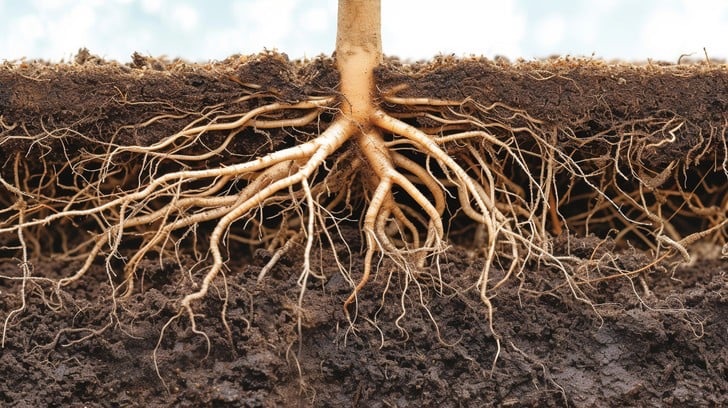
Root Systems

“He answered, “Every plant that my heavenly Father has not planted will be rooted up” (Matthew 15:13).

Jesus taught a crowd of people that were gathered to him, about what defiles a person. He explained that it is not what goes into a person’s mouth that defiled them, but what came out of their mouth. One of his disciples explained to him that the Pharisees took offence to what he said. Jesus’s response was that any plant that had not been planted by the father would be rooted up. In essence, He was saying that there were things planted by the father and other plants sown by someone else. He told the parable about the wheat and tares in Matthew 13, to illustrate the Kingdom of heaven. In this parable, a farmer went out and sowed good seed in his field. While he slept, an enemy came along and sowed thorns among the wheat.

In this instance, the farmer told the servants to allow the wheat and tares to grow together until the day of harvest. At harvest time, the thorns would be separated from the wheat and burnt. In Matthew 15, Jesus was referring to the Pharisees who had established themselves as the religious authority among the Jews. They had religion without salvation and a form of godliness without the power of Christ. It’s safe to say that their root system was faulty. The foundation of their beliefs and values were in the legalistic requirements of the Old Testament law. While Jesus did not come to do away with the law, he came for its fulfilment. The New Testament ushered in the dispensation of grace through faith and the free gift of salvation.

The Pharisees were so entrenched in their religious laws and doctrines, that they could not grasp the concept of salvation being a free gift. Their foundational root system was entrenched in their history and the laws of Moses. While our history is extremely important to understand where we are coming from, it should provide information and revelation for the future. Many people have carried on traditions, customs and practices that have been passed down from previous generations. It is important to examine our history to see the things that led to failures. Just because your grandmother, great grandmother, great great grandmother did something does not mean that you have to carry on doing it. The main lens for us to test values and ideas is the word of God.

Whatever we have been taught that runs contrary to the word of God, is not worthwhile keeping. There are many things which our fore parents did for survival, that may have been useful at the time. However, not everything is useful for subsequent generations. We have to examine our root systems to determine what is informing our actions. What seeds have been sown illegally into your heart and mind, that have taken root and are bearing unpleasant fruits? We have to deal with the root causes of some issues and stop trying to address major issues on the surface. Significant relationships with parents and relatives are the main sources of seeds being planted in us. In the same way that negative trees are planted, the word of God is able to root them out!

“Yet I planted you a choice vine, wholly of pure seed. How then have you turned degenerate and become a wild vine”(Jeremiah 2:21)?

A.P.-Y.

Power and Might

“But you will receive power when the Holy Spirit has come upon you, and you will be my witnesses in Jerusalem and in all Judea and Samaria, and to the end of the earth” (Acts 1:8).

Jesus is recorded as speaking to the disciples before his ascension into heaven. He reinforced the promise of the Holy Spirit and spoke of a new baptism not with water but with the fire of the Holy Spirit. This was manifested later with the Acts church when they waited for the promise. “And divided tongues as of fire appeared to them and rested on each one of them” (Acts 2:3).

God is a consuming fire and there are different manifestations of God in the trinity as the Father, Son and Holy Spirit. Jesus was referred to as the word which was in the beginning with God and was God (John 1:1). The word of God is quick, powerful, and sharper than any two edged sword, piercing even to the dividing asunder of soul and spirit, and of the joints and marrow, and is a discerner of the thoughts and intents of the heart (Hebrews 4:12).

God is also manifested in the person of the Holy Spirit who lives in us. This same power of God who raised Jesus Christ from the dead lives inside of you (Romans 8:11). Jesus has given us power to tread upon serpents and scorpions (demons), and over all the power of the enemy, and nothing can hurt us (Luke 10:19).

We have to maintain a consciousness of who we are and the power that lives in us. Our words are powerful and our prayers are strong enough to shake foundations. Our voices as people of God can change the world and we have the power and authority to move mountains. We can command the weather patterns and even the sea to be calm. Do you know how powerful you are? You have unlimited power from on high. “Little children, you are from God and have overcome them, for he who is in you is greater than he who is in the world”
‭‭(1 John‬ ‭4‬:‭4‬).

A.P.-Y.